





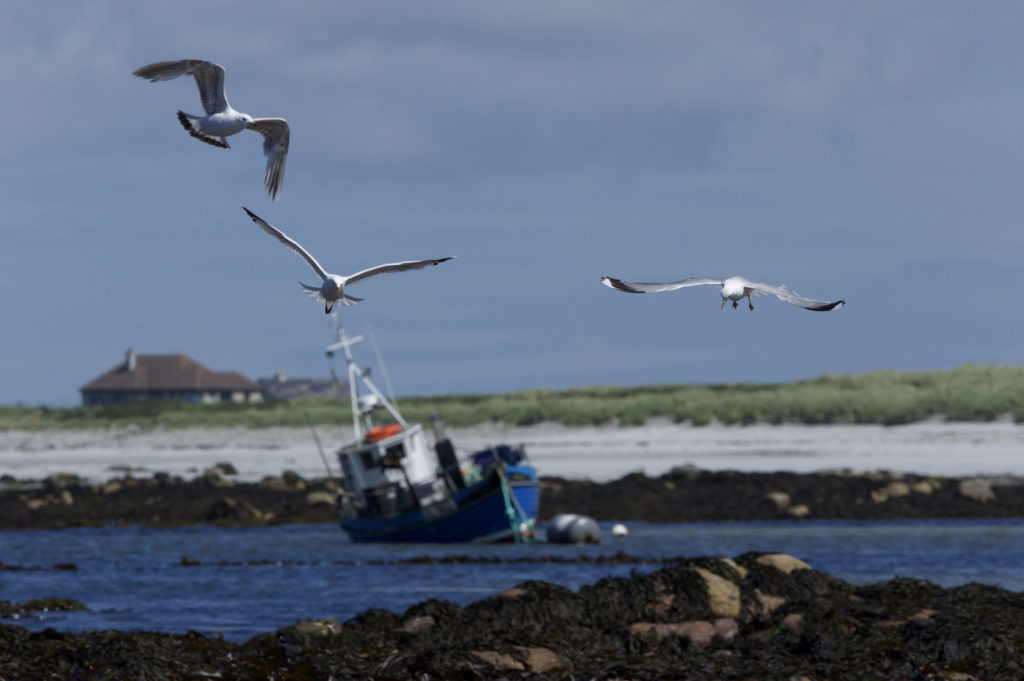
Sometimes you spend so long waiting for a good shot that when it finally arrives, you’re so excited that you can lose your composure and make silly mistakes. You can work around this to some degree by being so familiar with your equipment and shooting in a variety of conditions that your hands should act without you needing to think.
Some years ago we went to the Isle of Mull in Scotland to see White-Tailed Eagles. On this trip the boat-operator throws a fish into the water next to the boat, which usually attracts an Eagle to allow you a close encounter. I have always been of a polite demeanour, so whilst everyone else scrambled to the best positions, I found there was no space for me so I was left in the middle of the boat, standing on the seats, trying to get photographs. I hadn’t contemplated which settings would work best in this situation and was so overtaken by the awe of seeing a White-Tailed Eagle so close that the shots I came away with were nothing like I’d hoped for.
This has led me to consider the best-case scenario more before venturing out to take photographs. This way I can be prepared to take better images even when pleasantly surprised by a brilliant encounter.
There are still some experiences that catch us so unaware that there’s just nothing we can do to prepare for them. On a recent visit to St Kilda (again in Scotland), I carried the camera in my arms most of the time to ensure I would capture anything that popped up along the way. I did this continuously even though the camera is very heavy and St Kilda’s cliffs are extremely tall and steep, with one exception. I went to collect a trail cam one morning and as the walk to get there was fairly significant, I put the camera in my bag. What I didn’t know was that not far from the location of the trail cam was a group of rocks from which a huge bird would suddenly spring and fly off. The rangers hadn’t seen it for four days and we certainly didn’t anticipate seeing a Snowy Owl on a Scottish island. My immediate reaction was to grab at my bag and rush for the camera but the Snowy Owl was faster and all I got was some very distant shots.
A week later on South Uist, I had a close encounter with a Short-Eared Owl whilst taking the recycling to the local collection bin. This was the first time I didn’t have the camera on me whilst on South Uist.
It’s safe to say that you should always expect the unexpected, prepare for the best-case scenario and make sure your camera is fully prepped and on the correct settings before going out to take wildlife photographs. I always keep spare batteries and memory cards in my pocket rather than in my bag as in those moments where the experience is so unique and exciting, even a thousand images can be used quickly and you can never trust equipment not to play tricks on you at the worst possible time.
I have heard Wildlife Photographers previously say that you should be able to operate the camera with your eyes closed and I couldn’t agree with this more. It’s vital that you know your way around the camera extremely well for if the light suddenly changes or something that was stationary begins to move. This is where your user guide becomes priceless and regular use of your camera is a necessity – so when it comes to capturing the unexpected, you can be as composed and prepared as is humanly possible and enjoy that moment at the time AND in retrospect.
We love going to Scotland and there are two brands that stand out on any visit to the Scottish Hebrides – Co-Op and Ecover. Both are deemed ‘environmentally-friendly’. For island life, it seems to make sense to use something that supports a connection with nature when such a level of isolation insists upon the use of septic tanks. There are lots of reasons why we can benefit from embracing more environmentally-friendly products elsewhere though.
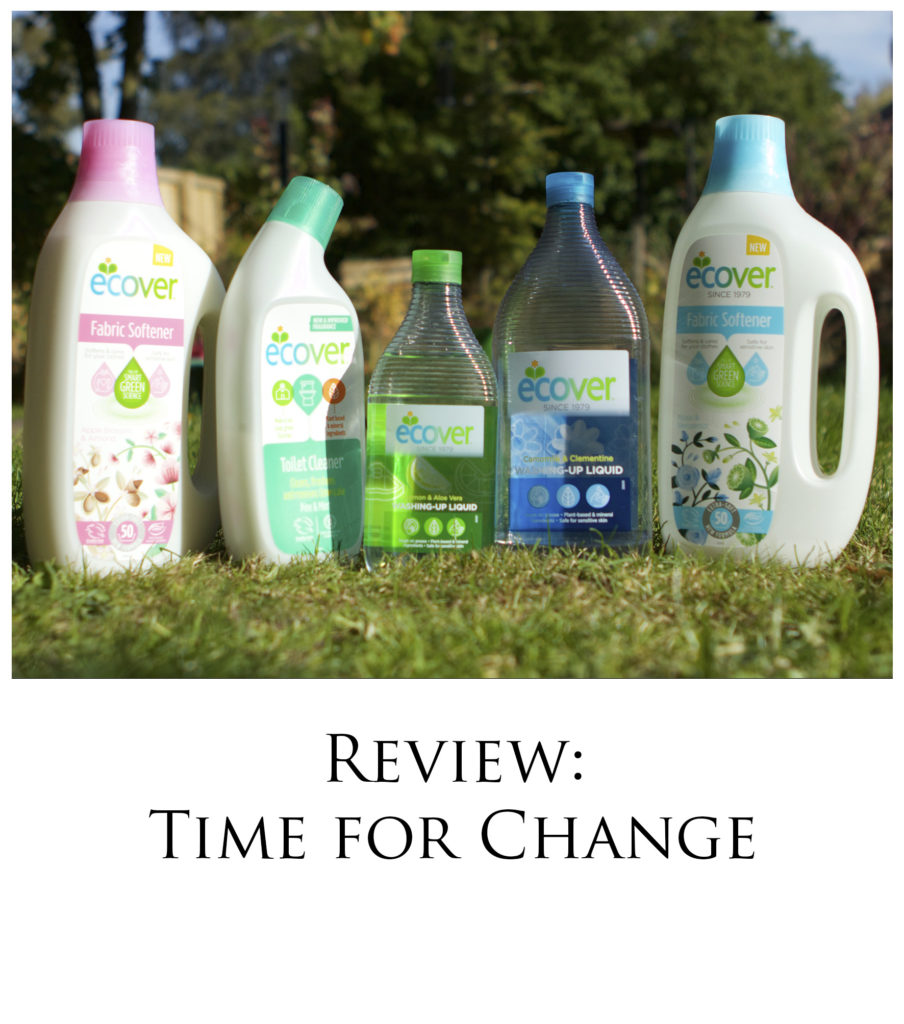
Many cleaning products contain chemicals that can be harmful to both us and the environment. There are other companies out there that support a more nature-friendly way of making their products though we have chosen to look at Ecover as they are well-known and their products are more readily available in local supermarkets.
On their website Ecover specify different ways in which they aim to reduce the negative impact that they have on people and nature. Amongst these is their intention to stop using any single-use plastic and instead have all their bottles made from recycled plastic. With such focus on the issues around plastic in the world at the moment, Ecover seems to push themselves beyond what is required from them by law and they appear to strive many steps further.
Ecover’s environmental message began in 1979 when they launched the first ever phosphate-free washing powder. It has taken until 2017 for this to be introduced into European Law. You might ask, what are phosphates and why are they harmful?
Phosphates are chemical compounds that are essential to life as contain phosphorous, which is important to animal and plant life as enables them to grow. The problem arises when too much phosphorous is introduced to an environment. One of the more prominent examples of this is in water. Algae is vital for many aquatic creatures to survive but a sudden boom in the growth of algae will reduce the amount of oxygen in water; therefore leaving aquatic life struggling to breathe.
Even after eliminating the use of Phosphates, a lot of household cleaning products still voice the potential for damage to nature on the bottles but many people may still shy away from gentler products with the fear that they don’t finish the job to the same standard.
Therefore we thought we’d find out once and for all, how do Ecover products perform in comparison to the items that sat under the sink before them?
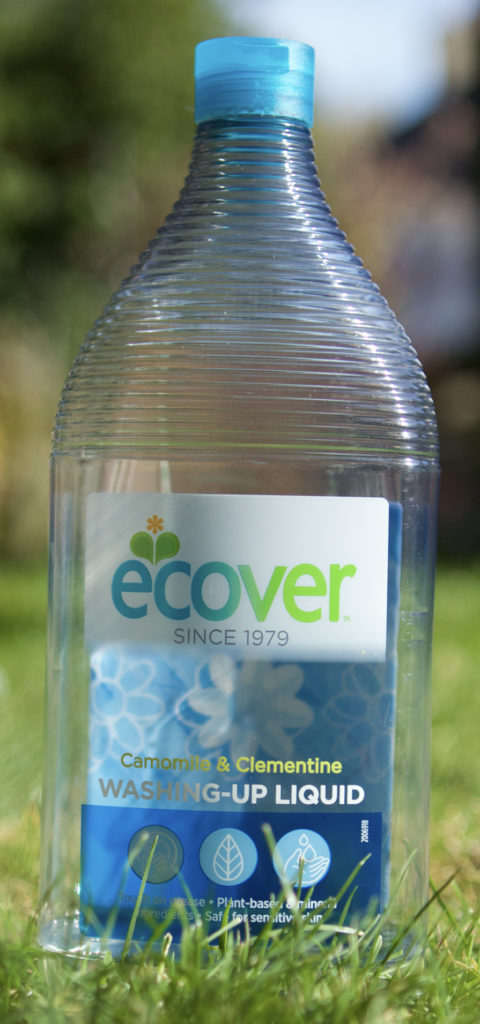
We started with Ecover’s Lemon and Aloe Vera washing-up liquid. It burst into frothy, soft, lovely-smelling bubbles straight away, which we found to be better than some of the cheaper products available in supermarkets. The liquid is not just nature-friendly but hand-friendly too, making washing-up a slightly less traumatic experience for these hard-working hands. When we read further on their website, we realised that it appears this is no accident.
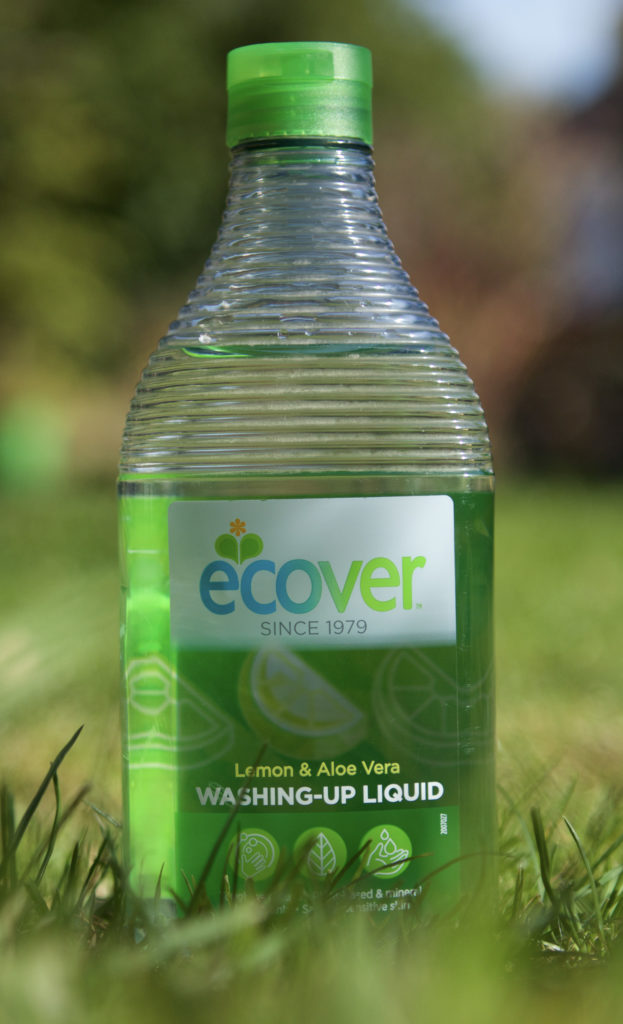
The dishes came out just as clean as our usual brand so we’re convinced by the washing up liquid straight away. The only downside is that we used it rather quickly so for the next purchase went for the 950ml Camomile and Clementine rather than the 450ml bottle we tried first. This has all the same benefits as the smaller bottle but is lasting much longer at a reasonable cost.
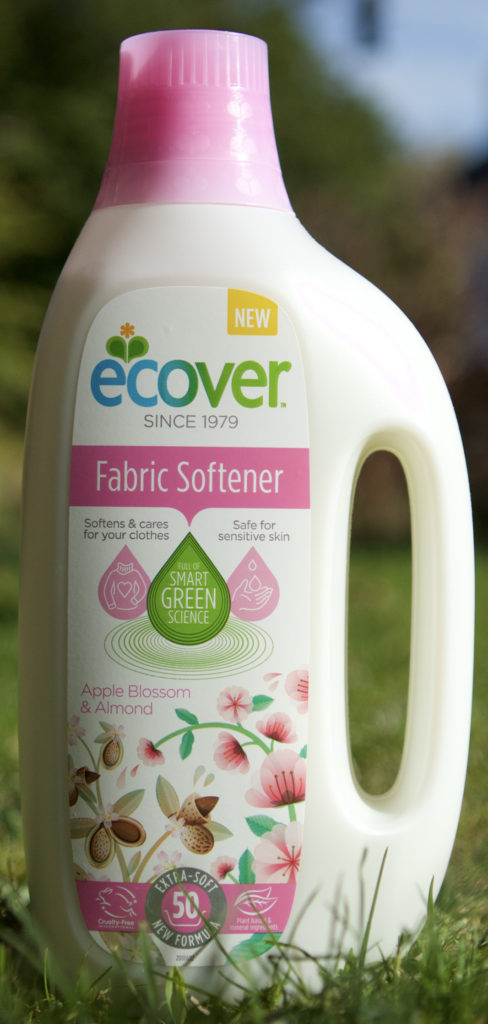
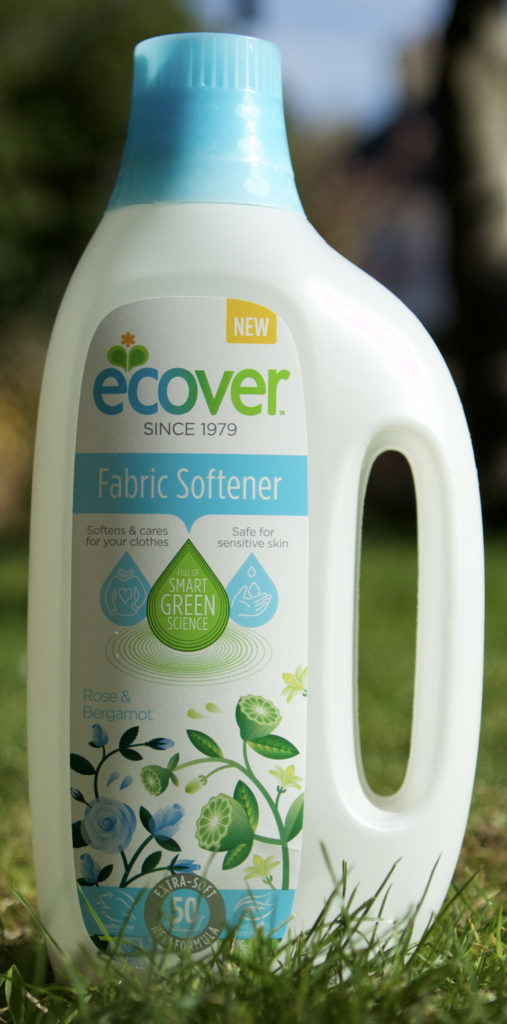
Next we look at the washing conditioner. We think that the washing smelled even better than usual and the clothes were plenty soft enough. What more is there to judge washing conditioner by? We’re happy!

Last but not least we tested out Ecover’s toilet cleaner. Whilst we can’t know how well it’s cleaning, it certainly smelled nice though didn’t bubble as much as other toilet cleaners we’ve used. This most probably is to do with the fact that the components of the toilet cleaner are, well exactly that…cleaner. Ecover’s philosophy is to be clean – to have a “Clean Business”, “Clean Plastic”, “Clean Water”, “Clean Sourcing”, “Clean Ingredients”, “Clean Fragrances”, “Clean Design” and “Clean Manufacturing”. If we have to sacrifice a few bubbles in our toilet to be more environmentally-friendly and embrace that philosophy, it seems worth it.
For More Information on Ecover Products
If after reading this blog you feel you’d like to know more about Ecover products, why not visit their website and think about making a change yourself?

Something that is often considered one of the hardest parts of being a Wildlife Photographer is the early mornings. For me this is actually one of the more enjoyable aspects. There is something about being awake before most other people and catching the sunrise that feels a bit special. The earlier you’re out and about, the more active wildlife is and the better the light is. There is always the risk that the weather doesn’t obey the forecast and actually your beautiful sunrise is sat behind a wall of cloud; but when your morning goes to plan, it really pays off!
Knowing the right time to do photography is essential to getting really good photographs. The light is one of the key features that influences how well your photographs will turn out. Many of us have probably experienced days when the light is so bad that every single photograph you take is poor. Unless you can find enjoyment regardless, these days turn out to be a big waste of time. Instead a little bit of research can go a long way.
I regularly use ‘The Photographer’s Ephemeris’, which is an app available on the internet that tells you sunrise, moonrise, sunset and moonset times as well as the direction that the sun or moon are in at each time. Combining this with the weather forecast is priceless.
It is also important to know your subject and what sort of photograph you’re going for. You might prefer harsh daylight if you’re photographing buildings and want strong shadows. If you’re photographing most animals, they are probably more active in the early morning or late evening but you still want to allow enough time to catch the ‘golden hour’ when the light is at it best. You definitely do not want to be setting up your camera when the sun is already up or, for the evening, when it is hitting the horizon. Keep in mind as well that how long you have of the golden light depends on where you’re stood. If the sun is going to disappear behind a hill, casting you in shadow before sunset, you want to know that you’re there early enough to catch the last of the sun’s rays.
There is enormous satisfaction in getting it right and instead of looking at every photo and pressing delete, you are more likely to have a lot more useable shots and much more fun when taking your photographs.

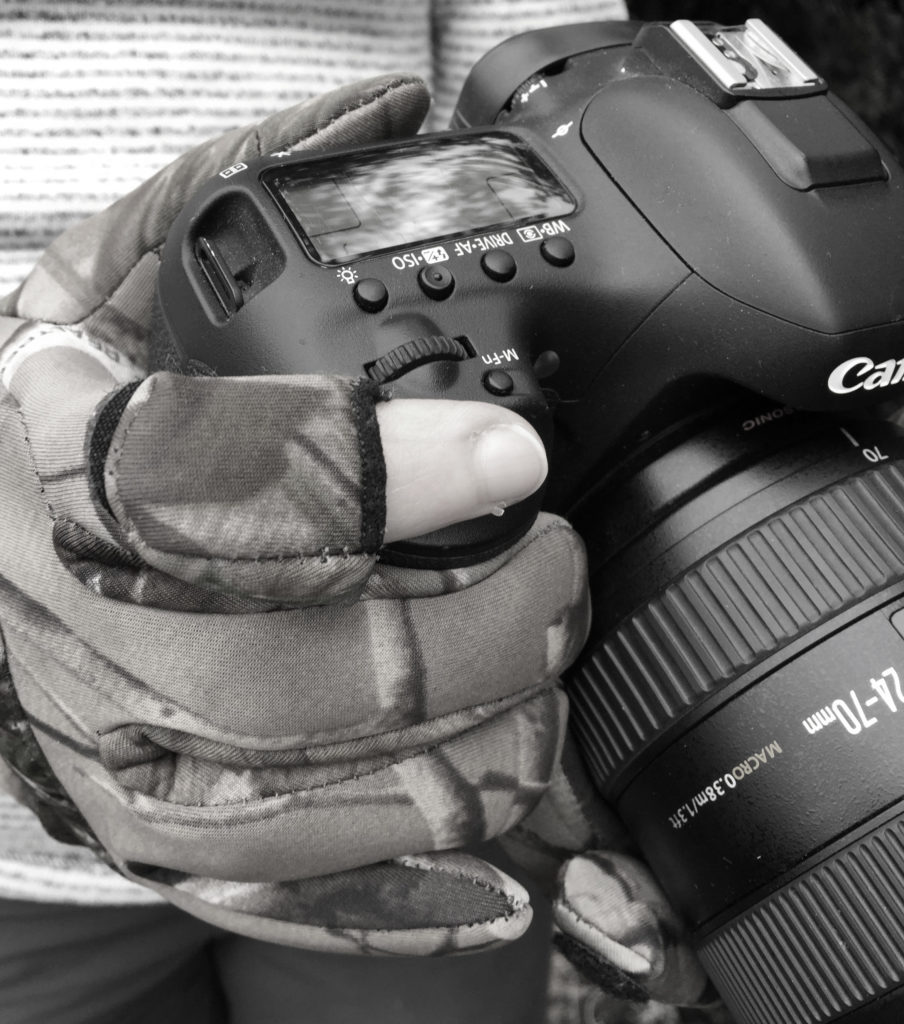
One year winter was coming and a friend of mine said that it’s time she bought a pair of gloves as she had none. I couldn’t understand this as I have gloves ready for every occasion. There are the gloves that I wear out for a day with friends or family, the gloves I wear for running, fingertip-less gloves for photography, thick gloves for walking, waterproof gloves for bad weather and gardening gloves for when the weather improves. For each of these activities I have more than one pair of gloves as after all, as it’s said “one is none, two is one”.
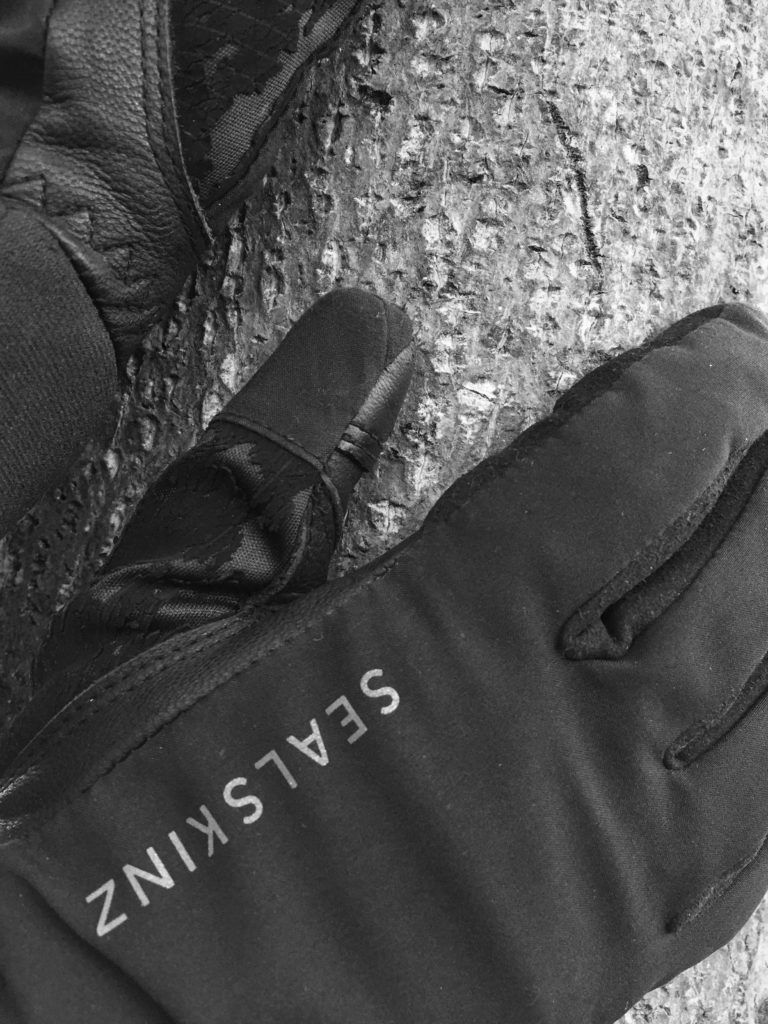
Even in the middle of summer it can be cold in the early hours so gloves can be vital year round. I have found a certain affection for clothing that supports my love for the outdoors and once I’ve found something that works, I see no reason to stray from it when purchasing replacements once I’ve worn the old ones out.
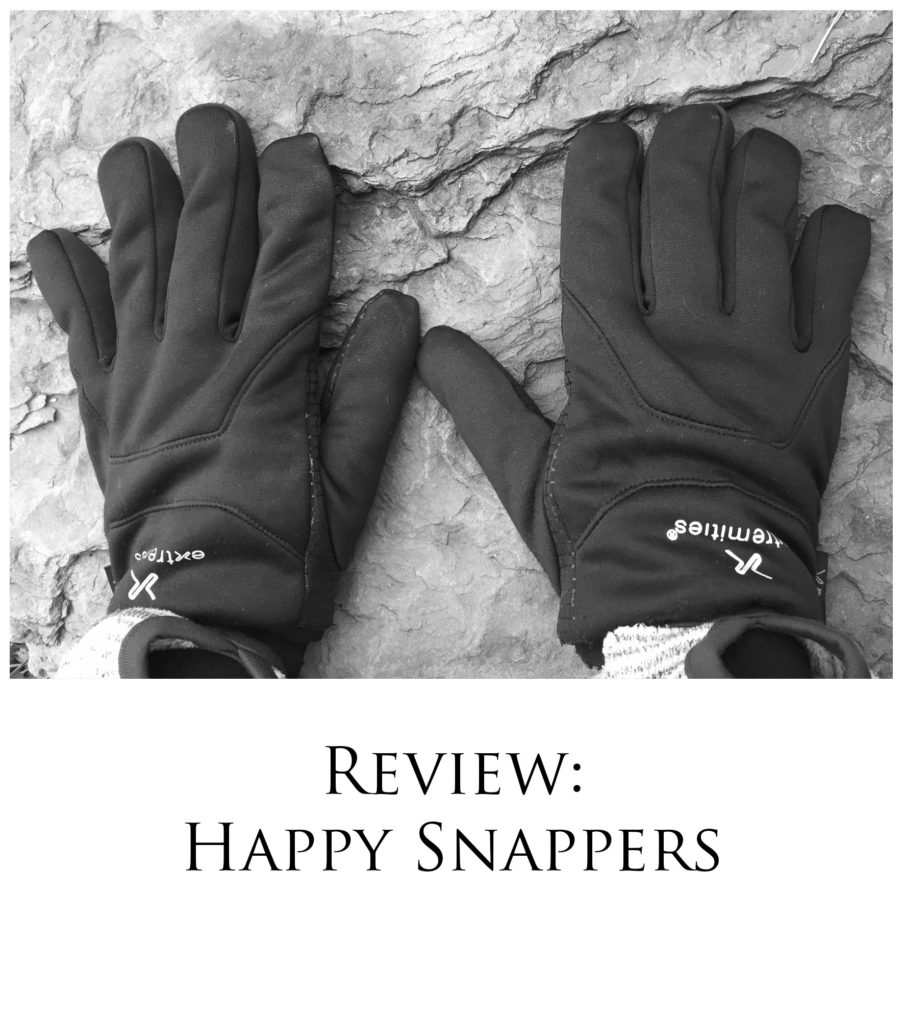
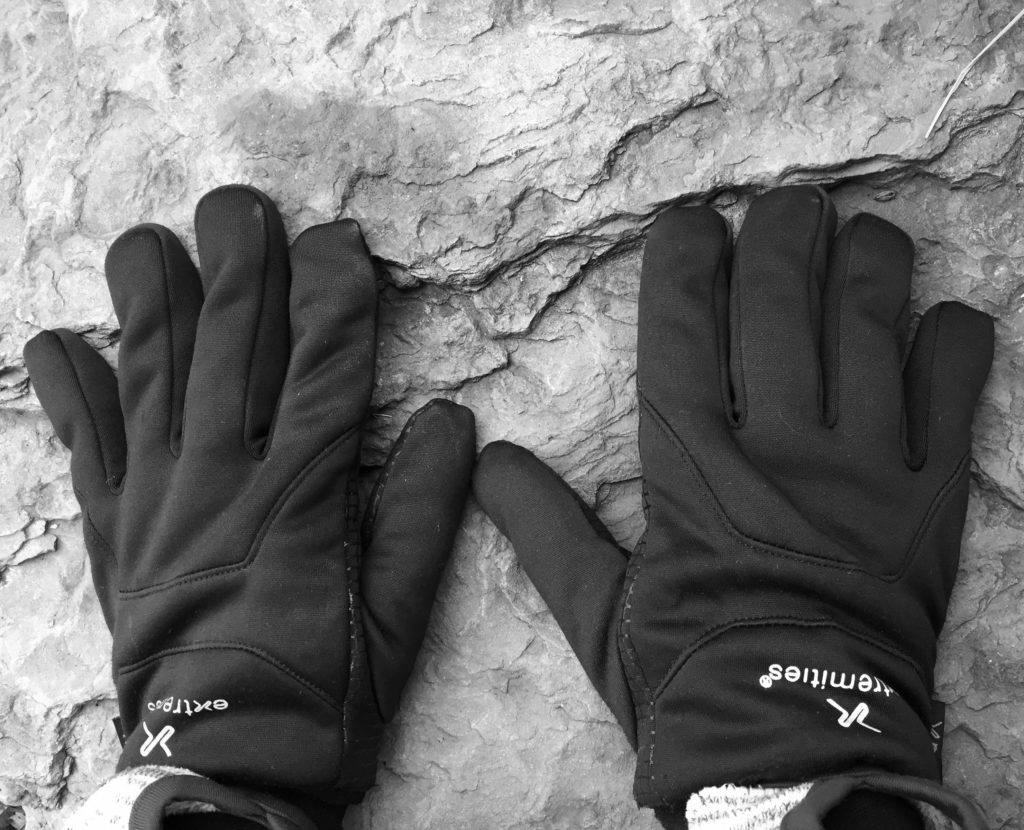
It’s surprising how well a camera can still be operated when wearing gloves but there will always be some styles that aren’t ideal for this purpose. There’s no point having a pair of gloves in your bag that you can’t use in a hide because you’d have to remove them to operate the camera. I normally begin with my ‘Sealskinz’ waterproof gloves if I’m outside rather than in a hide. I then tend to move on to my ‘X Dry’ Extremities gloves when my hands need to get toasty quickly. I often opt for fingertip-less gloves when in a hide and then again move to the Extremities when it gets colder. Whilst they’re thick I can still operate the main keys on the camera.
I suffer from Raynaud’s, which is when your circulation is affected and for me personally, this means my fingers turn white when I get cold. Before this started happening I purchased Garlands Neoprene Shooting Gloves for photography, which works well as you can velcro back the part covering your index finger so your shutter finger is free. Whilst they’re waterproof, they’re not very warm so if you also suffer with Raynaud’s they might not be as appropriate in colder weather.
Over the years I dabbled with hand warmers though what you choose again depends on your activity. For a re-useable hand-warmer that provides a quick burst of heat, I find self-heating gel cushions (that have a metal plate inside to activate the gel) work really well. This is particularly good if you have been out in the wild and then want to warm up when you’ve returned to the car or a tent. They also work well if you only feel cold because of a prolonged period of time outside rather than being cold for the entire time that you’re out and about.
For a lengthy cold stint it is better to have something that will last for hours. I marvelled at the genius behind the Whitby and Co Hand Warmer, which you fill with lighter fluid, light and then pop in its soft protective bag to hold on to for as long as you need toasty hands.
So whilst one item cannot cover all bases, a selection of the right products can make for a far more comfortable time out of doors. After all, happy hands make a happy adventurer.
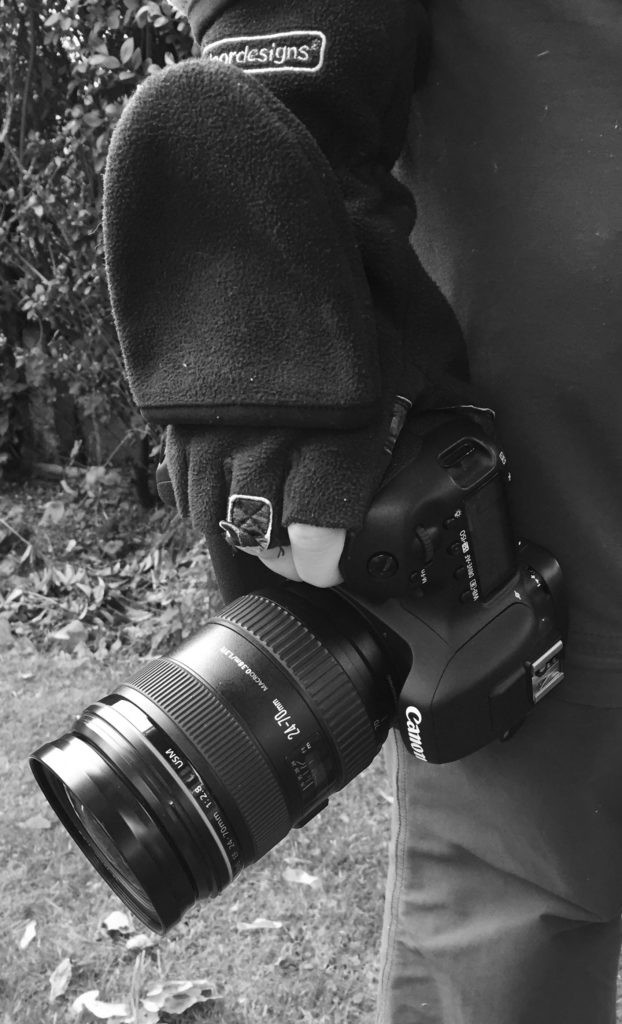
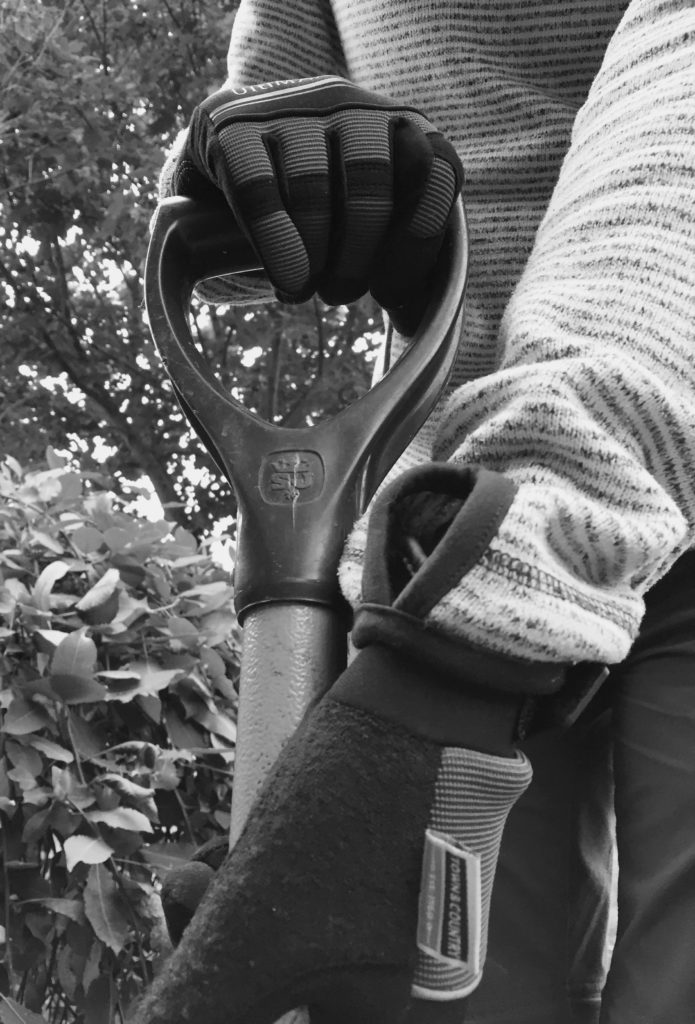
If you are interested in the gloves mentioned in this blog post, you can look into purchasing these or something similar below:
As project garden begins, we feel it’s a challenge to create a really fabulous wildlife garden but worth the trouble. Our Embrace Nature UK garden was mostly aesthetically pleasing when we started but it lacked variety and had a hidden rubbish tip behind one of the fences.
After introducing bird food to the garden, the wildlife soon arrived. We now enjoy visits from quite a few different species of birds and we regularly see hedgehogs, however, our garden is far from complete.
We intend to create something that will support many varieties of species as we want them to find all that they could possibly wish for in one place. We’ll dig a pond, plant flowers that help insects and create spaces for animals to live, breed and hibernate. In the coming months you can watch this happen, right here, on the ‘Project Garden’ blog.
We hope that you will also be inspired to make your garden even more wildlife-friendly. You can even encourage a variety of wildlife by making small changes. Invite insects to the garden first and other creatures will follow. Before you know it, you’ll have a whole ecosystem right on your doorstep.
You can create a water source for wildlife quite easily, for instance, ponds are great for frogs, toads and (if you’re lucky) newts. A bird bath will help the birds to keep their feathers clean and enjoy a drink. A clean bowl of water helps hedgehogs to keep hydrated.

We look forward to exploring these aspects of a successful wildlife garden in more detail as project garden begins. We hope you will find it useful and entertaining to see the creatures we welcome along the way.
Useful Links:
You can find out more about some of the ‘wildlife garden’ basics on the RSPB website:
We spent much of 2017 watching hedgehogs in the Embrace Nature UK garden and assumed that by December they would all be hibernating. Much to our surprise, a young hedgehog was rustling about in the leaf litter on the night of 9th December 2017 in freezing conditions. We were aware that this was unusual but were unsure about what to do. Therefore, we brought him into the house in a cardboard box and got tapping away on the computer.
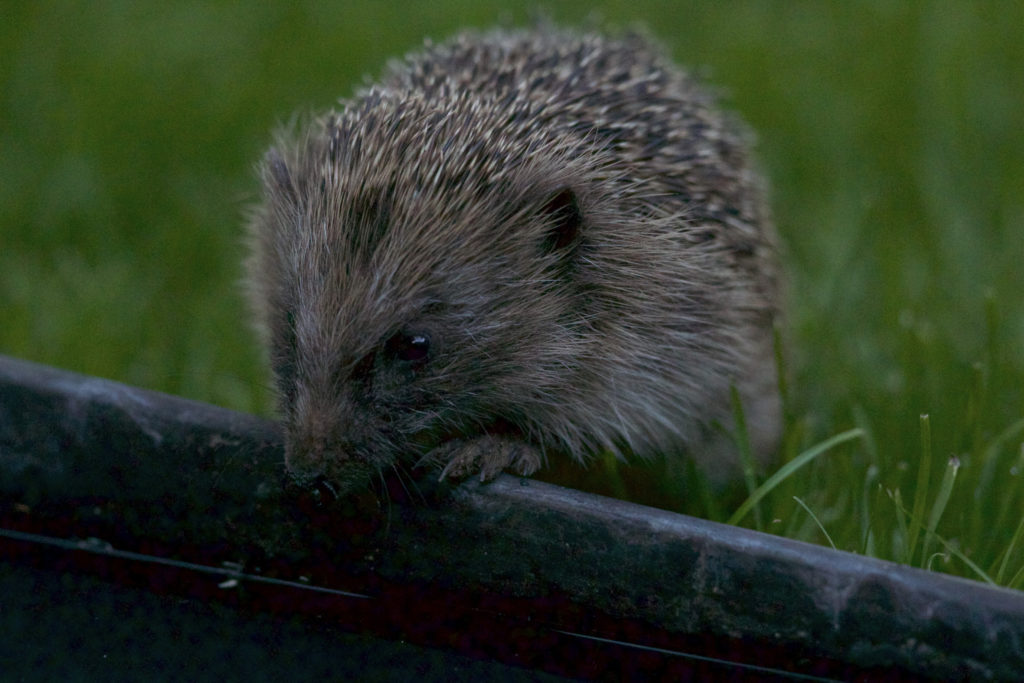
We were unable to reach anyone who could give advice or help, so helped the hedgehog as much as we we able to. We already had hedgehog food and gave him water. On the first night he was keen to eat and drink and seemed in relative health as he escaped through the handles of the box and went walkabout in the kitchen. We surrounded him with tea towels to keep him as warm as we could and gave him a hot water bottle under the covers but were sure to take it out before it got cold.
Hedgehogs are very messy creatures and are not particular about where they leave their faeces. Therefore we changed his bedding every morning and night and coincided the bedding changes with a weigh-in and an opportunity for him to have a walk about. He would explore the hallway and had little trouble climbing the stairs. He did not seem to exhibit any of the issues associated with a poorly hedgehog that we read about on the internet. It wasn’t easy getting an accurate idea of his weight to begin with so it wasn’t until a few days after finding him that we realised he was losing weight.
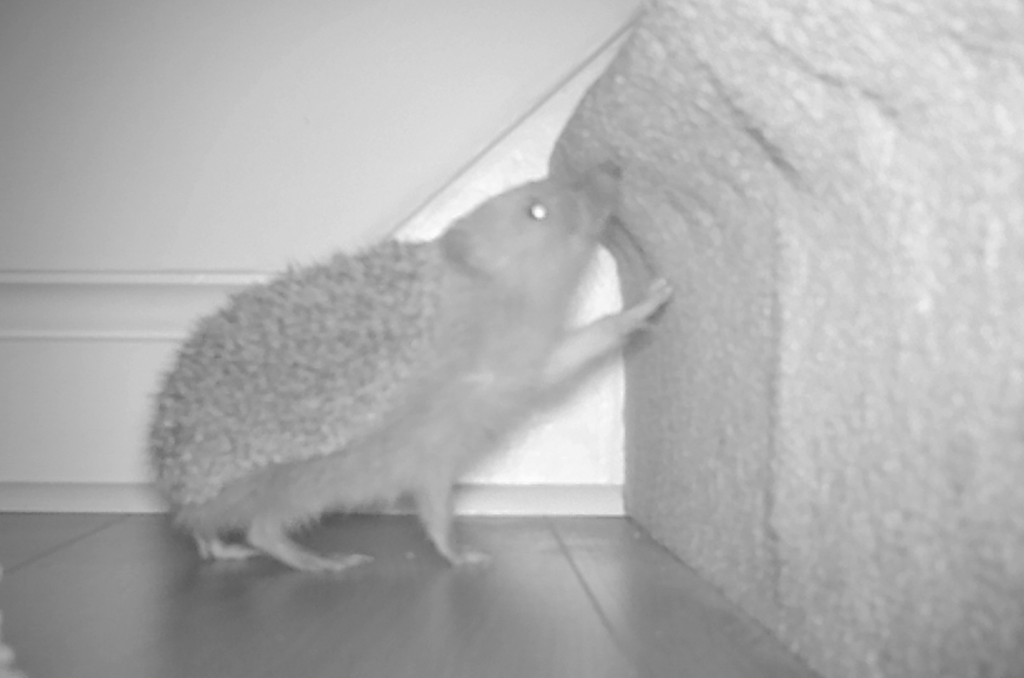
Too much human contact can be stressful for hedgehogs so we built our guest a slightly more substantial area to sleep and walk about in out of cardboard boxes. After learning how strong a hedgehog’s front legs are, we were sure to make the sides impossible to reach so he couldn’t escape and come to any harm.
Around the time that we managed to reach a hedgehog expert, it was clear that the hedgehog was not well. We’d read about worms and lungworm being potential issues and booked in as soon as possible with a vet who was experienced with seeing and treating hedgehogs.
We referred to the hedgehog as Haim (meaning ‘life’) though sadly, after a week of living with us, he passed away at the vets after beginning worming treatment. This is not an unusual scenario and many autumn juveniles cannot build enough weight or strength to hibernate. Once brought indoors, there is a fine line between life and death as they are easily stressed and even nature can work against them; most commonly with parasites.
We learnt a lot from looking after Haim but sadly not enough to save his life. Had we have left him outside he’d certainly have died as the snow began to fall. We found information on the internet to be mostly limited to suggesting numbers to phone for advice. As no one answered our phone calls for most of the short week he was with us, we were left to use our initiative, which wasn’t enough to help.
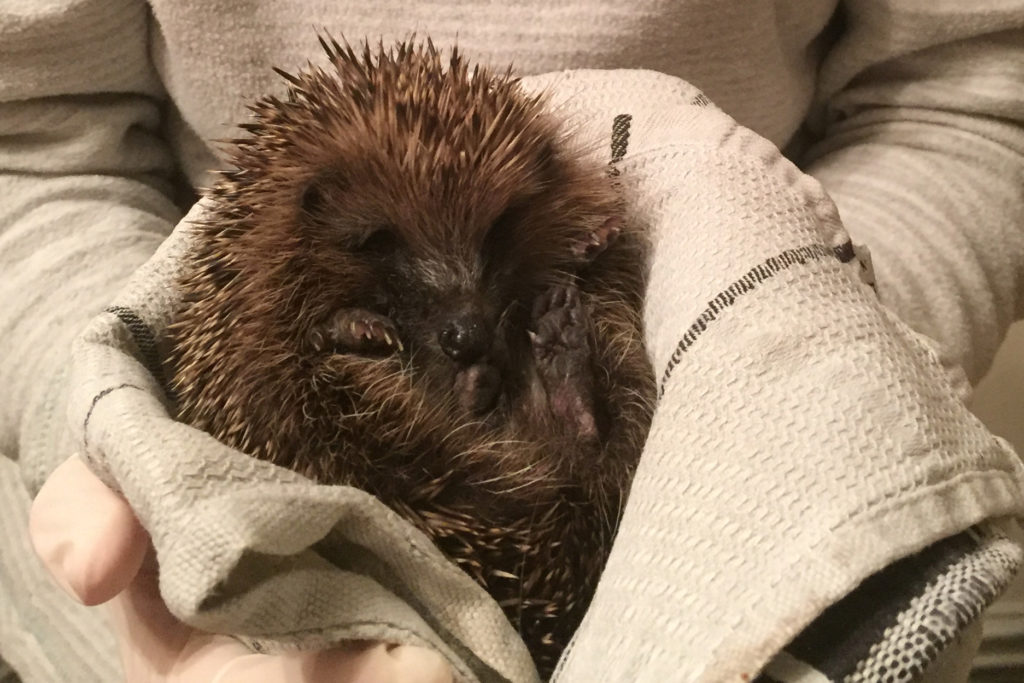
Therefore, whilst we are not experts on this subject, we’ve decided to give a few pointers to anyone who finds a hedgehog out and about during Winter. For more information, seek advice from local animal rescue centres – some of which may have a 24 hour helpline. The information below is for the duration between finding a needy hedgehog and gaining professional advice.
 Not all hedgehogs feel the need to hibernate during milder Winters. If a hedgehog appears in good health and of a good weight in mild weather, it is probably fine and is best left undisturbed.
If you find a hedgehog awake in very cold weather, it is underweight or appears to be in poor health, it is likely that it needs your help. Bring it indoors, give it plenty of bedding or towels and a hot water bottle or heat pad under the bedding. Allow the hedgehog space to move away from the warmth and remove hot water bottles before they get cold. Provide them with food and water.
Contact a local animal rescue centre for advice. If you’re unable to reach them, call a veterinarian so you can combat potential health issues early on.
Take a sample of the hedgehog’s faeces to take to the vets. This will help them to identify any problems so they can treat as appropriate.
Try to keep noise and handling to a minimum with the hedgehog. The experience of being unwell or cold and then brought in to an unfamiliar location to begin with is probably quite stressful enough so too much noise or handling can exacerbate the problem.
Weigh the hedgehog if you’re able and confident enough to. We found that a flat electronic kitchen scale with a bowl on top worked best. I would pick up Haim gently with gloves on and a tea towel then rest him in the bowl to take his weight before placing him back with the tea towel. It was the weight loss that prompted experts to suggest a vet and get Haim treated.
Vary the hedgehog’s diet. Hedgehogs love meal worms but they’re not nutritious and can cause hedgehogs to refuse other food. A few meal worms are good for a treat, but here are examples of other foods and drinks that you can offer a hedgehog:
Scrambled or boiled eggs
Raw or cooked meat and chicken
Chicken in jelly (mash with a fork to make it easier to eat)
Very small amounts of plain cake or biscuit
Cat biscuits (chicken mixture is arguably best)
Hedgehog food
Water (it’s important to give the hedgehog a dish with water in so they can drink as they please)
Lactose-free milk (warm it up and check it with your finger to make sure it’s not too hot)
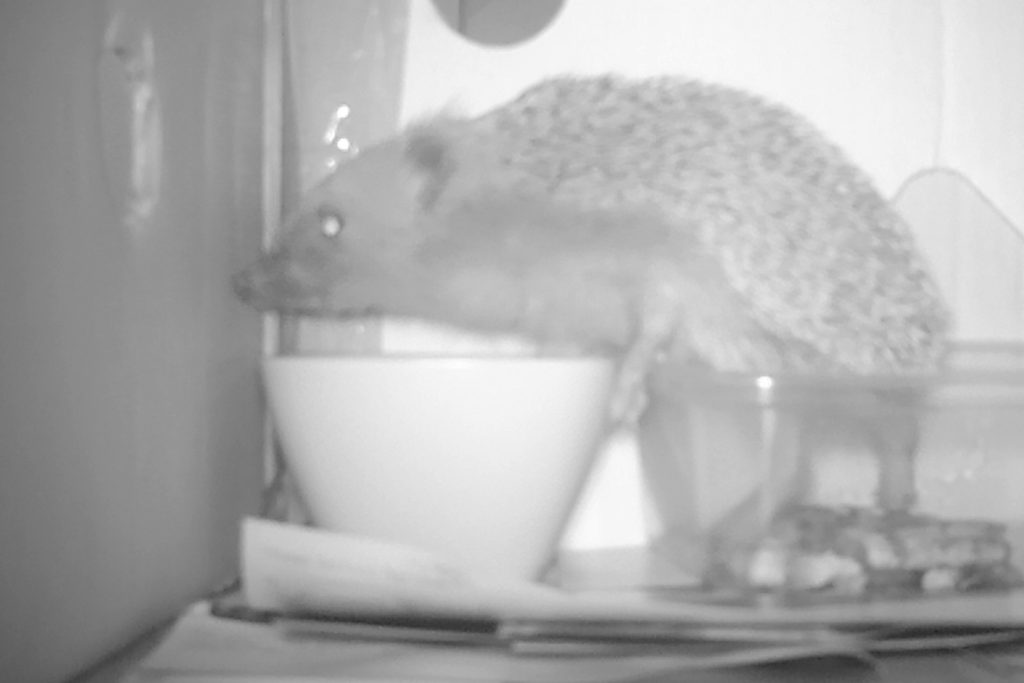
Do not overwhelm the hedgehog with too much food as they don’t eat very much normally. Do not take creatures from the garden to feed the hedgehog as this can make the hedgehog unwell.
Put food in a container that the hedgehog can easily eat out of but that doesn’t rattle when they touch it. Sound can put hedgehogs off of eating so the quieter everything is, the better.
It’s important to remember that the hedgehog might not make it and not to blame yourself if it doesn’t. Do the best that you can to help and get the hedgehog to an expert as soon as you can. If it doesn’t make it through, at least it will likely have died in a more comfortable setting than it might otherwise have done if left alone in the cold. Use sources available to you to make the most appropriate judgement as to whether a hedgehog needs help before taking it from the wild.
Even if you’re not looking after a hedgehog that requires your assistance, it is helpful if you put out food and water for any hedgehogs that decide to stay awake throughout the Winter.