We all remember remember the 5th of November and with firework displays all over the country we are able to enjoy the night. For animals it can be quite a different matter though. Naturally animals will be unaware of the source of the loud booms echoing from a variety of locations and with many of them having more acute hearing, the event can be extremely stressful for them. Therefore, we have put together 10 top tips to consider for the night when animals and fireworks need to co-exist.
Cats and Dogs
Walk dogs early enough to ensure that they’re back home before the fireworks start.
Close windows and curtains to keep the sound out and pop on some music to disguise the booms.
Secure your home so that your pets can’t escape if frightened. Make them a cosy corner to hide away in if they are afraid.
Ensure your dog is carrying ID so if it does escape, you can find it again.
Don’t be angry with your pets if they’re acting up because they’re scared but do reward calm behaviour.
Small Animals
Bring your pets indoors if you’re able to. It’s better to do this gradually so they can get used to the change.
Cover hutches and aviaries with blankets and give animals extra bedding so they can snuggle away. Make sure you allow openings for ventilation though and so they can look out!
Wild Animals
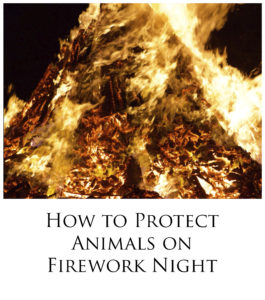
Check bonfires to make sure there aren’t any animals resting or hibernating under them. Before you light your bonfire, either move it completely or use the handle of a brush and a torch to check no one has moved in. Potential residents could be Toads, Frogs, Newts or Hedgehogs.
Light your bonfire from one side only so any animals that might be hiding underneath can have an escape route.
Hedgehogs may still be out and about at this time of year and are very sensitive to loud noises. Using a feeding station not only protects them from predators and their food from cats but it also might make them feel more secure when the fireworks are going off.
Remember that animals and fireworks do not make for a comfortable mix and so it’s better to limit your firework displays to official celebrations such as bonfire night. If you take care to look out for the animals in your home and garden, you should then be able to rest easy and have a happy firework night!
Watch Our Embrace Nature UK Episode About Firework Night:

Well it’s that time of year again where people dress up to become witches and monsters, decorations go up and the streets are filled with tasty treats. We don’t normally embrace Halloween as much as we could but this year we feel that there’s a way to enjoy Halloween and throw nature into the mix at the same time.
Halloween is getting bigger in the UK but hasn’t reached the popularity that it has in America. Therefore we could be missing a few tricks of how to enjoy it to its fullest extent. We have therefore spent this week looking at ways to bring nature to the party in the way of how we prepare and use our pumpkins.
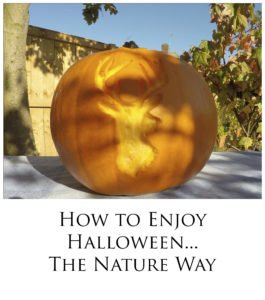
We started our approach to this with nature-inspired templates to carve into our pumpkins. There are some species that are so prominent during Autumn that it makes sense to allow them to inspire our designs for Halloween.
In order to carve our pumpkins, we cut out the templates, stuck them where we wanted the image and then used a pin to poke holes around the design. Removing the template then allowed us to see where we needed to go around with a knife. We carefully carved the design into the pumpkin without fully cutting through so we’d get a lovely orange glow once a candle was put in.
We decided to recycle the whole of the pumpkin, which not only prevented waste but also allowed us and our birds in the garden a treat.

___________________________________________________________________________
A lot of flesh comes out from each pumpkin when you carve it, so why waste it? There are a multitude of recipes for pumpkins and we chose to make pumpkin pie. In order to do this yourself, you would need:
- Preheat the oven to 180ºc, gas mark 4 or 160ºc for fan ovens
- Roll out the pastry on a floured surface so that it fits into the dish you are cooking it in
- Pinch the edges of the pastry once it’s in the dish so it has an attractive pattern all of the way around
- Place the pastry in the fridge for 15 minutes
- Boil the pumpkin until it’s soft then once it’s cool, blend it until it is smooth
- Put baking paper and baking beans over the pastry then bake for 15 minutes
- Remove the baking paper and beans then bake for a further 10 minutes
- Turn up the oven to 220ºc, gas mark 7 or 200ºc for fan ovens
- Combine the sugar, salt, nutmeg and cinnamon
- Add the eggs, butter, milk then pumpkin to the dry ingredients and stir after each addition
- Pour the mixture into the pastry then cook for 10 minutes
- Reduce the oven temperature to 180ºc, gas mark 4 or 160ºc fan and bake for 35 minutes or longer if required
- Allow to cool then serve
We think food always tastes better outdoors so why not pack up a bit of pumpkin pie and enjoy it during a day out.
___________________________________________________________________________

We love watching the birds in the Embrace Nature UK garden and so with Halloween approaching, thought we’d use the seeds from our pumpkins in some home-made bird food.
Larger birds should be able to eat the seeds whole but if you want to invite smaller birds to the party, it’s best to either chop the seeds up or use a blender to do it for you.
We mixed in meal worms, bird seed and our pumpkin seeds with peanut butter to keep the ingredients together. We chose Meridian Smooth Peanut Butter as it contains 100% nuts so we could be sure to avoid feeding salt to the birds. Salt in large quantities can be very harmful so is best avoided where possible.

We put the mixture into a container lined with baking paper so it wouldn’t stick. We added some twine with a loop in so we could hang this up afterwards and then left it in the fridge to set.
Whilst this method worked, we chose in the end to chop the food into smaller squares and place it on the bird table as the weather is unpredictable and we didn’t want the peanut butter to melt and become too gooey for the birds to eat as this could also potentially be harmful.
Our home-made treat has gone down very well in the garden and our host of bird-visitors have worked their way through very quickly!

___________________________________________________________________________
Once the inside of the pumpkin has been used and Halloween is over, it’s a shame to waste the lantern. We found a few ways to ensure that it doesn’t needlessly go to waste. The first thing we did was fill one of the pumpkins with seed and see how the birds took to it. You could hang up the pumpkin if you prefer.
Some of our bravest and most boisterous birds, the Starlings, took to the pumpkin very well and would poke their heads in to get the seed. We saw the Robin appear plenty on the bird table with the pumpkin there though it went more for the seed around it. The other birds became more comfortable with the unusual ‘bird-feeder’ after a day or two and we starting finding some confident Collared Doves enjoying the seed direct from the pumpkin too.

___________________________________________________________________________
When you’ve put in all of that effort to carving your pumpkins, why not use it for something aesthetically-pleasing once Halloween is over? We found an attractive option was to use the pumpkin as a plant pot.

___________________________________________________________________________
When your pumpkin is looking rather worse-for-wear, don’t just throw it out, compost it to gain the nutrients in soil for other plants!

___________________________________________________________________________

It’s often said that “if you fail to plan, you plan to fail”, which is even true when carving pumpkins. The best way to ensure that your design looks good is to draw out a template first or straight on to the pumpkin.
We want you to be able to carve nature-inspired pumpkins too so have included the templates we’ve used on here for you to print out.
We hope you’ve found these ideas inspiring! Have a very happy Halloween!
Every Autumn, the blow of the on-coming colder weather is softened by a spectacular natural event that happens in many countries across the world. A lot of leaves begin to change colour from green to bright oranges, yellows and reds. The sight is attention-grabbing but how many of us understand the science behind ‘the big drop’?
How Leaves Work
Trees and leaves are complex organisms and the process that keeps trees alive is quite astonishing. Leaves play a vital part in this. They are responsible for using sunlight, Carbon Dioxide (CO2) and water to create ‘tree food’. This process is called Photosynthesis. The leaf uses Chlorophyll, which is a green pigment contained in chloroplasts, to carry out Photosynthesis.
Sunlight is an aid to transforming water and Carbon Dioxide into Glucose (which the tree uses) and Oxygen; which is a by-product of the this process. This is why we are so heavily reliant on trees and plant-life as they enable us to breathe. Naturally, this is one of the reasons why deforestation is such a big issue.
Once the leaf has created sugar, it carries it back to the tree via its ‘Vascular Bundle’ – the tubes seen in the diagram below. This collection of veins also carry water to the leaf.
The Vascular Bundle carries the sugar all the way down the stalk so the tree can continue to thrive. Whilst this is ideal during warmer months when there is plenty of sunlight, Winter is a different story. Most of the trees that lose their leaves are called Broadleaf trees. There are some exceptions but generally speaking, these leaves are more vulnerable in harsher weather and so it is safer for the tree to cut them off and store the nutrients in an almost ‘sleep-mode’ until the days are longer again.
Evergreen and Deciduous Trees
Not all trees need to shed their leaves during the big drop. Again, there are exceptions but most trees that keep their leaves year round (named ‘Evergreen trees’) have needles as their leaves. They tend to have a waxy exterior that protects them from the more unforgiving weather and the shape is thought to aid their survival.
The trees that do take part in the big drop are referred to as Deciduous. They have the ability to sense when the days are getting shorter by using Phytochrome and Cryptochrome to detect light. This allows them to gradually slow down making Chlorophyll, which decreases the amount of green colour in the leaves; allowing the oranges, yellows and reds to show. Eventually the tree uses a layer of cells referred to as the ‘Abscission Layer’ to ‘cut off’ the veins, which stops the carrying of water and nutrients back and forth between the tree and the leaf. In time the leaf decomposes and drops away to the ground.
Humans and Trees
It can be easy to take trees for granted but they have existed on Earth for approximately 370 million years whereas humans have been here in our modern form for about 200,000 years or 300,000 years as new findings suggest. Yet humans are creating larger issues on this planet than any other species seems capable of. We have merely scratched the surface in terms of science and have to wonder, what else is there to discover that we do not yet know? We are already aware that our actions can directly threaten our own survival and without the knowledge of the full story, we cannot know all of the consequences of our actions. It seems to be safe to say that we must try to reduce our negative impact on trees as much as we can and that can be done in our every day lives.
Watch Our Embrace Nature UK Episode About the Big Drop:
The Farne Islands are the perfect location for any birder or wildlife-enthusiast. You can have close encounters left, right and centre and come away with photographs to be proud of. We paid a visit to Inner Farne last year and enjoyed getting close to Shags, Puffins, Kittiwakes and many other wonderful sea birds. Whilst we love nature, we have to accept that some sides of it aren’t so glorious. It’s a fact that we’re all aware of but it can sometimes be a little difficult to accept and we find ourselves rooting for one species or another.
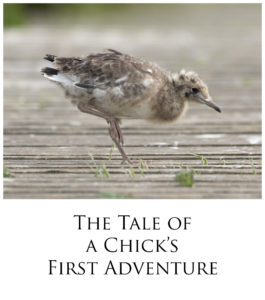
Whilst photographing Puffins flying in with their catch, I witnessed a young Gull chick venturing from the undergrowth onto the boardwalk. I watched as it headed over to the other side; seemingly curious as to what the world had to offer.
It certainly produced a tale worth repeating.
Within moments a Black-Headed Gull had launched onto the young bird’s back and began an attack. Bewildered, the young bird tried to escape.
It wasn’t long before people began to notice and took to shouting at the adult bird to let go. As the young bird managed to escape, it started to take on a gauntlet of one Gull after another. A Herring Gull launched the next attack with more vigour. It pinned the bird to the ground, whilst pecking at feathers.
It held the young bird by the head, seemingly in control of the situation. However, this chick was not to be under-estimated!
Whilst the Herring Gull thought it had a hold of the bird, it wriggled and scrambled to find its way to freedom. Using the foliage as cover, it ran into one more trap before getting away to live for another day.
Looking rather more disgruntled than it did at the beginning of its first venture out, this young Gull made it through the first test of life.
This behaviour is not unusual and often it ends badly for young birds. It is thought that as adult Gulls are so territorial, this is reason enough for them to attack wandering and curious young birds. Another reason for this attack could simply be down to the adults quest for food. We have witnessed Herring Gulls eating a dead chick previously and this situation is well-recorded.
Whilst nature may be brutal, it certainly puts birds to the test from an early age; ensuring that only the very strongest survive. Perhaps this young chick has the genes it needs to be a survivor. We hope so.

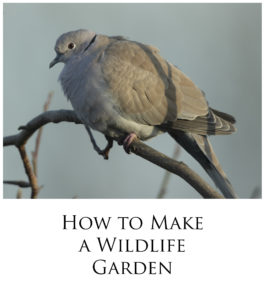
How do you make a wildlife garden?
The question is a simple one but there are many in-depth answers that we could respond with. We are under-taking exactly this task – making the Embrace Nature UK garden more fit for wildlife. Chris Packham once stated that despite his efforts in managing his garden, his neighbour had all the wildlife even though they did nothing to encourage it. It’s true that a scrappy piece of land can invite all sorts, though our intention is to entice a variety of animals by creating the necessities that they require. We will cover these things in more detail in future blog entries but for now, here are some of the things you can do to begin your wildlife garden.

Food
This is pretty obvious. Animals, birds and insects all need food but sometimes it comes down to more than just ‘nipping’ to the shop and purchasing bird and hedgehog food. This is a part of it but it’s more beneficial if you bring natural nutrients to the garden as well. One way to do this is to invite insects to the party first. Building an insect house is a great way to do this. An insect house might come in the form of something you purchase from a shop, a log pile or a home-made insect haven formed from wooden pallets.

Insects also need food of their own though, which is where clever planting comes in. Look for bee-friendly flowers and maybe keep an area for nettles so butterflies can lay their eggs on them.

Shelter
This is something that you can once again build yourself. Bird boxes, hedgehog homes and shelters for frogs and toads are all things that can be relatively easy to create and make a big difference to the wildlife in your garden. Plenty of foliage in the garden can be used to make these shelters a little more discrete and don’t forget those log piles! They are superb places for animals looking to hide away.

Water
Water is essential for life in your garden. Ponds are brilliant to have for those creatures that live in water or rely heavily on insects that surround water. They can be big or small and can be very simple to introduce to your garden.
It is also important to have places for birds to drink and bathe, in which case a bird bath is brilliant and for mammals such as hedgehogs, a bowl on the ground with water in is ideal.

Access
You won’t get wildlife in your garden unless you make sure animals can find a way in. This isn’t such an issue for birds and insects but for mammals such as hedgehogs, access is essential. Hedges are a natural way to keep access to the garden but if you have fences, you can simply cut a series of holes in the base to encourage some new visitors.
It is not only access to the garden that is required for wildlife. It’s important to have food and water that can be accessed by the species visiting. This might mean having a variety of water and food sources to please different creatures.
Access is also vital to avoid disaster. Create routes out of ponds so hedgehogs can find their way out if they fall in.

Embrace Nature UK – Episode Two
In Episode Two of Embrace Nature UK (available on Youtube), we have a look at the work we’ve done so far to get our own wildlife garden started. Keep watching this space to see the progress we make over the coming months.
The story of the persecution then recovery of Red Kites in the United Kingdom is a great example of success for reintroduction and one that is commonly referred to. We have gone from having a very small protected population in Wales, after a dramatic affect from human impact, to being a common sight in the skies above us. The Embrace Nature UK team are very fortunate to be located in an area that is exceptionally good for Red Kite numbers as we are not far from one of the release sites. It is not uncommon for us to look out the window and see a Red Kite flying past.

Whilst the recovery has been embraced by many, not everyone sees the benefit in a recovering population. Birds of Prey often have enemies, which is why they have been at risk for so long. Many members of the public enjoy heading to Red Kite Feeding Stations where they can enjoy close encounters with hundreds of Red Kites at a time so it might come as a surprise that not everyone is enthusiastic about their comeback. Some people see the birds as a threat to their own livelihoods or hobbies, which has led to birds being trapped, poisoned, shot and the destruction of their nests.
Whilst the RSPB is aware of many incidents, they believe that there are more that go unreported and therefore are trying to prompt the government into increasing protection for birds of prey at risk. It’s no wonder when the rarely-caught criminals then get away with seemingly light sentences. There will likely always be a struggle between those who love and wish to protect birds of prey and those who would rather they weren’t around.

A common scenario we have come across in the past is people blaming birds of prey – most notably Sparrowhawks – for a decrease in song bird populations. The argument is fruitless as there are direct links to habitat loss being the cause for many bird’s difficulties. The balance between predators and prey is also one of the most natural and sustainable evolutionary symbiotic relationships imaginable.
Most issues for many creatures now can be easily traced back to human impact, so to demonise birds of prey and suggest that their existence is threatening other species shows a remarkable misunderstanding about their nature.
Thankfully some people have worked to find kinder solutions to troubles that might arise in terms of protecting livestock. An example of this would be keeping young Pheasants in release pens until they have grown enough for the threat to have reduced.
Sadly, even though some gamekeepers have managed to live peacefully beside birds of prey without so many losses, it takes a long time to change minds and so the problem is likely to persist. We certainly hope that a solution is found to move closer towards keeping bird of prey numbers high as we’ll never get bored of looking up and seeing spectacular birds gliding along right above us.
Spiders are a difficult subject to photograph. It doesn’t seem as if it should be that way as they are everywhere. This is what makes it so frustrating when trying to capture a good, or even remotely OK photograph of a spider. There they are, sat in the dark corner of your living room, doing something interesting in one of the most amazing creations by a creature – their web – and yet everything that a photographer hopes for when capturing an animal, is missing from this scenario.
The light is bad, the composition is bad, the background is dire, the web is dull, if you focus on the spider’s eyes, the legs are blurry, if you increase the aperture, the shutter speed is too low and the spider is still BLURRY. When you get it in focus to a reasonable degree, guess what?! The overall lighting and appearance of the scene is so terrible that the only rightful place for the image is in the trash.
This might be enough to put you off of spider photography for life, but fear not! There is a way to take good photographs of spiders but you have to be choosy.

Some photographers may move spiders to a location where they can safely control the lighting and the position of the spider, but this only suits one type of spider photography. If you want photos of spiders in their natural environment, exhibiting natural behaviour, you need to approach the subject differently.
We’ve put together these points to help you improve your spider photography and walk away smiling.
Choose a subject in the open
It may sound obvious but in order to avoid bad photos of a spider in a dark corner, you need to photograph a spider that isn’t in a dark corner. The lucky side of spider photography is that spiders really are everywhere. Look on and in walls, amongst gravel, on your lawn, in trees and there will likely be spiders. Greenery makes for a nice background and you may find a greater variety of species around the garden than you do in the house.
Lighting
This is immediately helped by going out of doors to photograph spiders. The time of day can influence how much light you have and sometimes you’ll find a sunny day brings out a lot more spiders, and therefore more options as well. Macro lenses immediately take light away from you, so the brighter it is outside, the better chance you have of getting a good balance between aperture and shutter speed. If your spider is stationary you might benefit from using a tripod so that the shutter speed will have little bearing on how well the shot turns out. This will allow you to use a smaller aperture (a larger ‘f’ number) and in turn have more of the spider focussed.

Hold your breath
These two spiders were very active a few days ago in the Embrace Nature UK garden. The light was not on our side, nor was their location in which case getting them focussed or in good light at all was extremely difficult. The photos will not be winning awards but show the behaviour as we followed a few of our own suggestions to capture their activities. One of the ways we did this was by holding our breath whilst taking the photograph. As the spiders were moving continuously a tripod didn’t seem appropriate. There was one bit of bright green in the garden at that time so we had to crouch to get it in the background, then sway back and forth trying to get the spiders in focus. We were breathing hard at the end of it but holding our breath for the photograph stopped us from losing that fleeting focus that was essential to capturing these images.

Take your time
Rushing photographs can often lead to poor results. Many spiders will sit still and seem oblivious to your frantic attempts to capture a good image of them. Before the days of digital photography we had to rely on our eyes at the moment of taking the photograph to achieve the results we desired. Nowadays we have a ‘cheat-screen’. We can check how the light has turned out, we can zoom in and see if the subject is focussed and whether we have successfully composed the image. This new-found glimpse into the outcome of our work in the field is not to be underestimated. Check that the photographs you are taking are good, and if there is something you don’t like, tweak the settings until you get photos that you’re happy with. Spiders may have their difficulties as photographic subjects, but sitting still is maybe one of their real qualities. This will not always be the case but in many situations you will have the chance to take your time and criticise your images as you go; resulting in better over-all outcomes.

Jump for action
As with any animal, you need to expect the unexpected and be prepared for anything in order to get great shots. Keep your batteries charged and your camera accessible with plenty of free shots on your memory card as action can happen at anytime. Perhaps you pop into the garden to empty the bin and then see a beautiful spider wrapping another spider in its web. It’s easy to pass by and ignore this because it’s “just a spider”. It isn’t. Never underrate arachnids. They are as interesting and incredible as any other creature you might stumble across with your camera. I won’t pretend I don’t have a fear of some spiders but they fascinate me, and if you want good photographs of them, they should fascinate you too and make you want to share their beauty with the world in the form of your photography.
Embrace Nature UK once asked a group of people, who would not describe themselves as nature-lovers, what they did in their spare time. Many of their answers were activities that included enjoying the natural world such as going for a walk or feeding the ducks. We realised that you don’t have to consider yourself a nature-lover to embrace nature and appreciate different aspects of it. So what does it mean to embrace nature in the UK? We’ve put together these ideas to keep you inspired and show how you can enjoy the wild world whether on a small scale or large.

1. Eat Wild
In 2006 we visited Guatemala and spent two weeks eating fresh food. Pineapple never tasted so good so was a huge disappointment when we returned to the UK. There is plenty of great tasting food back home though and it’s even better straight from the tree, bush or ground. You can either grow things in your own back garden, or go and seek some snacks out in the wild. A word of caution though…make sure you definitely know what it is that you’re picking. Something poisonous can easily be mistaken as edible and the consequences can be fatal. There are lots of books available to help you avoid such mistakes so you can enjoy eating wild safely. Why not also take your food outside to eat either in your garden or make up a picnic of wild treats to be appreciated out of doors.
2. Get up early / stay out late
We are both night owls and early birds as there’s so much to see at both ends of the day. Get up really early during Spring to hear the dawn chorus and watch the sun rise. Stay up late throughout most of the year to see hedgehogs. Dependent on where you are you might see a variety of things including badgers and foxes. We love running in the late evening when deer are more active as well as bats and owls or early morning when you might have a close encounter with a hare or other mostly nocturnal animals that are making their way to bed. Animals are rarely keen on crowds, which is what makes these quiet times so special.

3. Climb a mountain
We may not have the highest mountains but we have some beautiful peaks in the UK. Why not don some walking gear (and safety accessories) and make your way to an enjoyable route somewhere in Great Britain. Snowdon and Ben Nevis have great views but aren’t the only fun places to explore. It’s not only mountains that are enjoyable to climb. There are some brilliant hills too. One of our favourites was The Cobbler in Scotland. It’s dramatic, beautiful and a good walk. It’s also close to other hills and mountains in case you want to kill two birds with one stone. Most mountains and hills have more than one route up so you can truly get to know all angles of the landscape. We have had countless exciting walks up Snowdon from different angles in all weathers and will likely never get bored.

4. Go camping
Camping does not just mean one thing. There are all sorts of types of camping now but our favourite is out in the wild where you’re truly alone and can experience nature at its best. Camping isn’t just for summer either. So long as you’re well-equipped, winter camping can be pretty cool. We’ve enjoyed camping experiences on Snowdon and Scafell where you awake to stunning scenery. It’s definitely not for the light-hearted though as the weather can make camping feel dangerous and very cold.
An experience for the whole family is often better on a campsite where children can be introduced to the enjoyment of the great outdoors but without the danger and with facilities. Toasting marshmallows can be a brilliant alternative to computer games and can bring the family closer together.

5. Star gazing
We get more clear nights than you might think in Britain and you start to realise this when you choose to look up. We’ve had some good years of asteroids and eclipses to look out for but you don’t need fancy equipment to enjoy watching the night sky. Websites such as www.spacecentre.co.uk tell you when something exciting is happening though there are many occassions when you just need to look up to see shooting stars or appreciate the beauty of the stars and moon. Why not try learning a bit about constellations and the science behind the activity in space to get even greater enjoyment from taking the time to step outside and look up.

6. Swim outdoors
What is now a popular activity referred to as wild swimming was once simply called swimming but the enjoyment factor has not changed. The water is often cold but there’s something about braving it and jumping right in that makes swimming in the outdoors so fun. There are loads of places to enjoy it but some of our favourites include the rather chilly fairy pools on the Isle of Skye, Loch Morlich in Scotland (although this was especially cold!) and a more peculiar swim was with a bed through the river Nidd in preparation for Knaresborough’s famous bed race. Whether you choose to don a swimsuit, wet suit or dry suit, get in the water and find an activity that you enjoy to fully embrace the natural world in the UK.
7. Garden
Anything that can get you out of doors for a prolonged period of time can help you get closer to nature. Gardening can be good for your health in various ways. It can be good exercise, get you out in the fresh air and can also be relaxing. Gardening can also be good for nature if done in the right way. Have a look at our ‘Project Garden’ blog to see how we are gardening for nature.

8. Watch nature in towns and cities
You don’t have to be in the wilderness to see nature. There are plenty of animals and birds that favour towns and cities. They often congregate there as food is readily available. Whether it’s Pigeons in crowds in the town centre or Foxes idling from bin to bin during the night, they can be pleasurable to watch. Why not stop and look to observe their behaviour? The RSPB often sets up in cities to watch Peregrine Falcons on the tops of buildings and show the public these wonderful birds that are so often missed.
9. Climb a tree
More so associated with being a child, climbing trees need never get old. It’s great fun to spend a day with all the family in a woodland climbing fallen trees to see how far you can get. We’ve always found the New Forest to be a great area for this as there are large fallen trees that still present a great challenge. Kids love taking part and adults can’t deny that they all still hold a childish side inside of them.

10. Watch a wild event you’ve never seen before
There are a lot of incredible wild events to witness throughout the UK that many people may not be aware of. Tourists flock to places like Blackpool but so do Starlings and the event is magnificent. The Deer rut can be seen throughout Great Britain and you can enjoy seeing a variety of species become boisterous and play out this natural behaviour, which never ceases to be entertaining. The Capercaillie lek, Great Crested Grebe mating dance, Toad mating season, boxing Hares and Seal mating seasons are among many great spectacles to see in Britain.